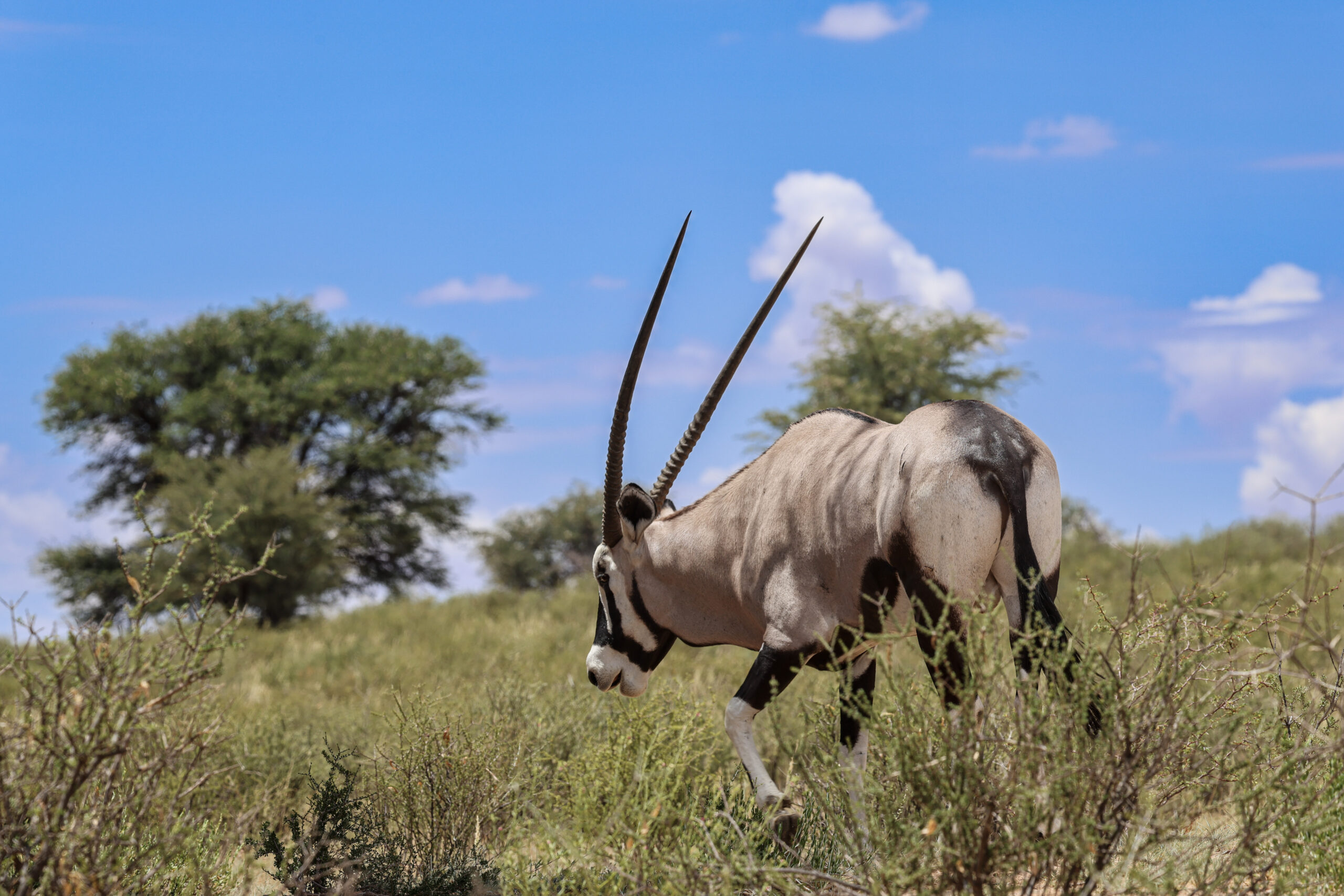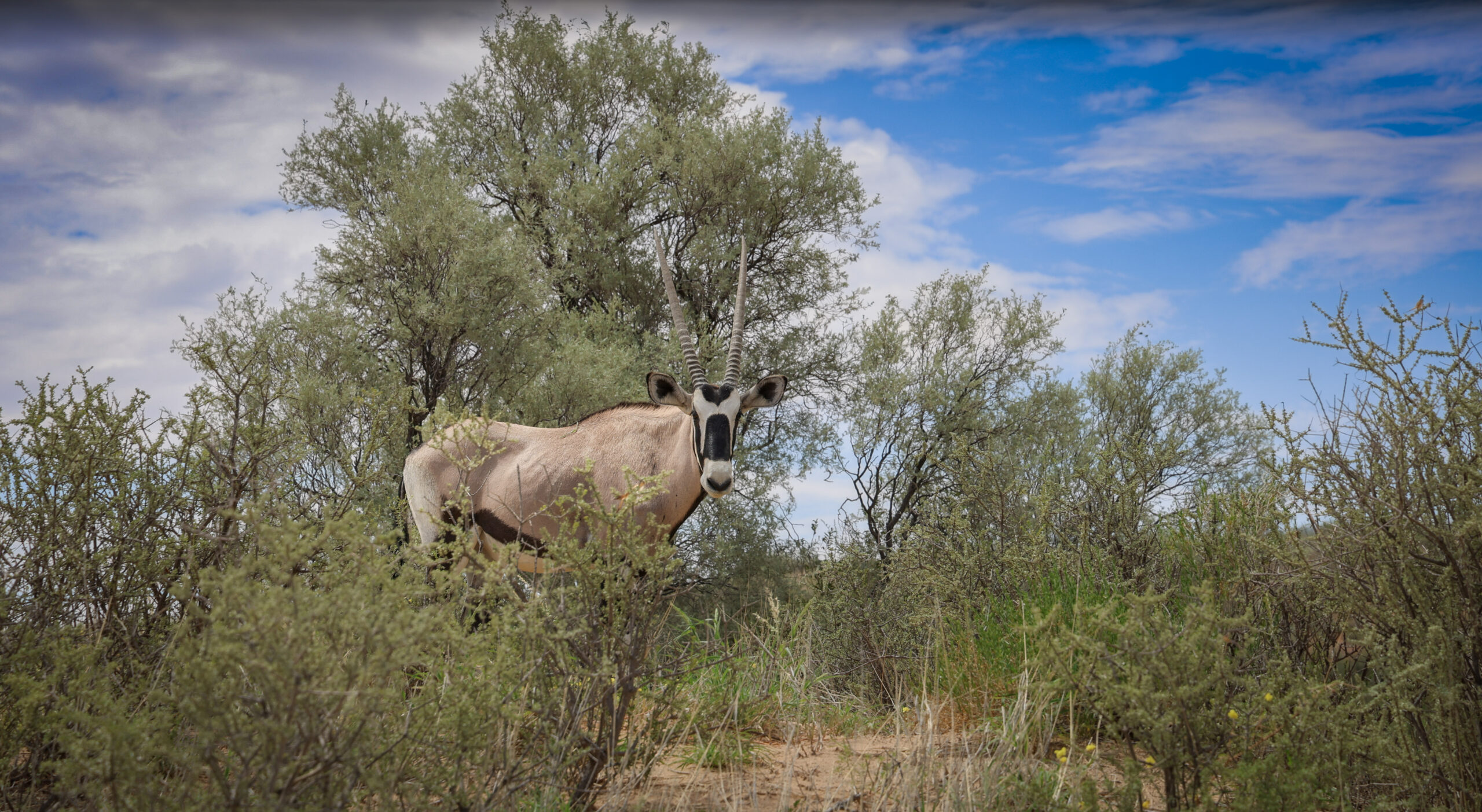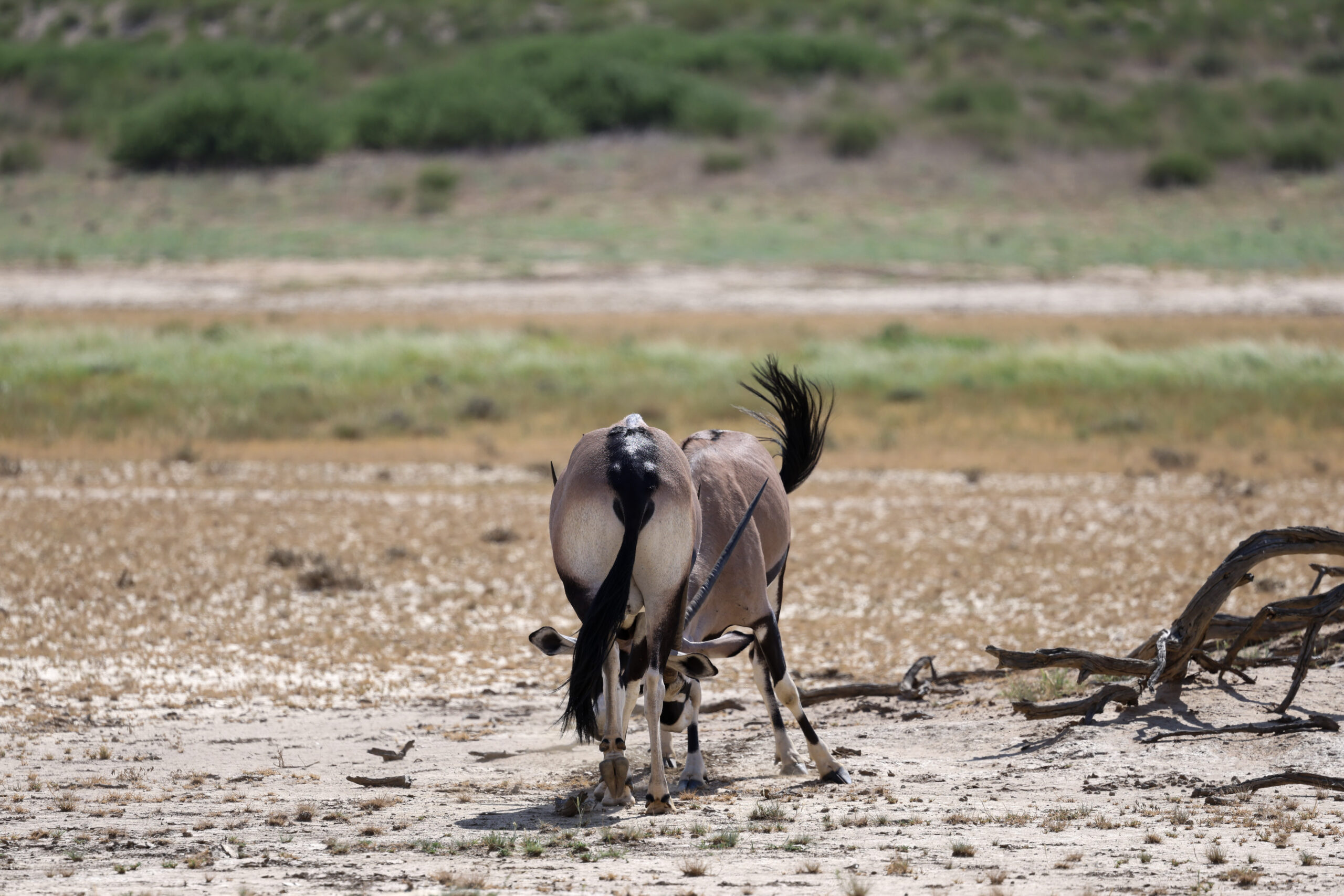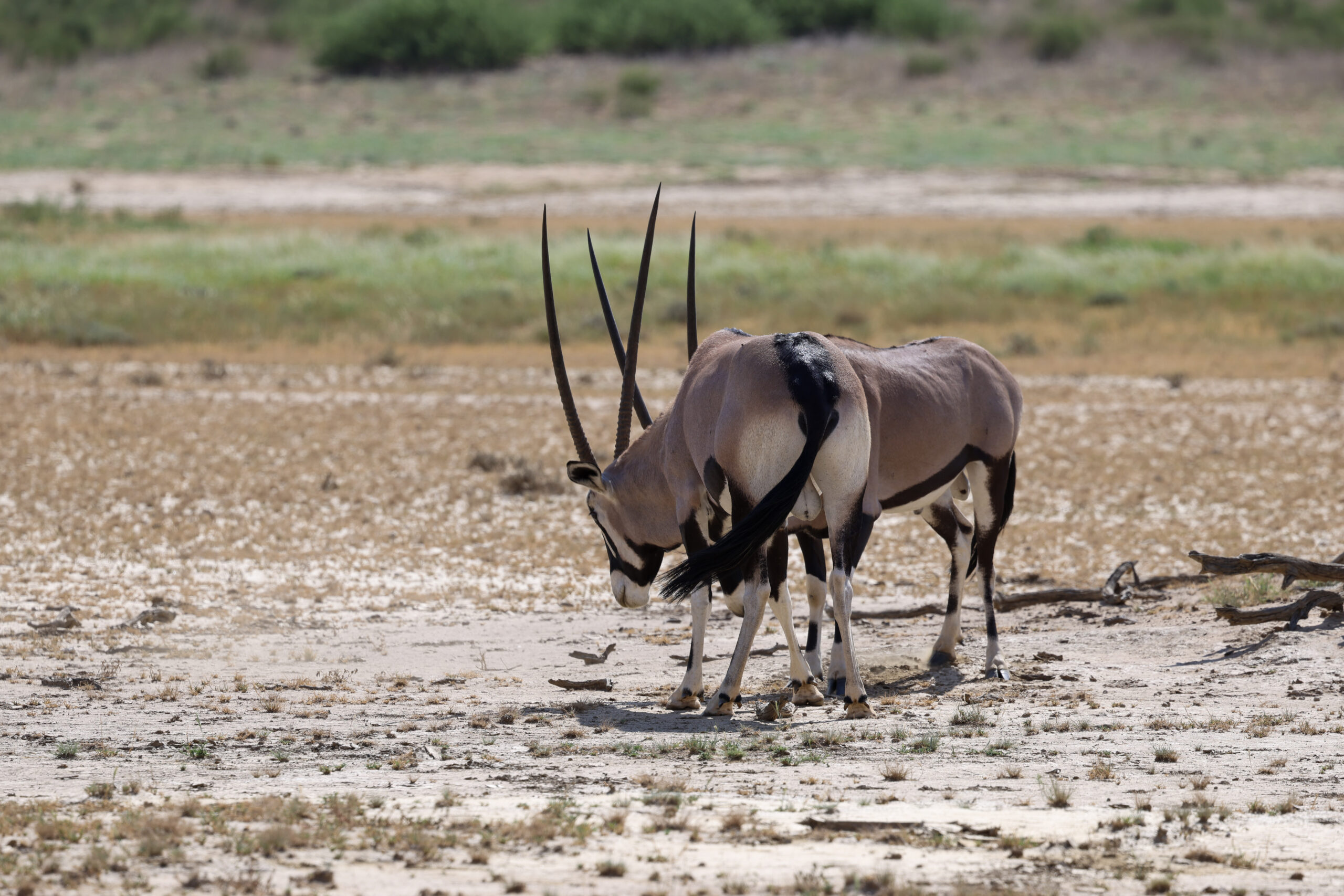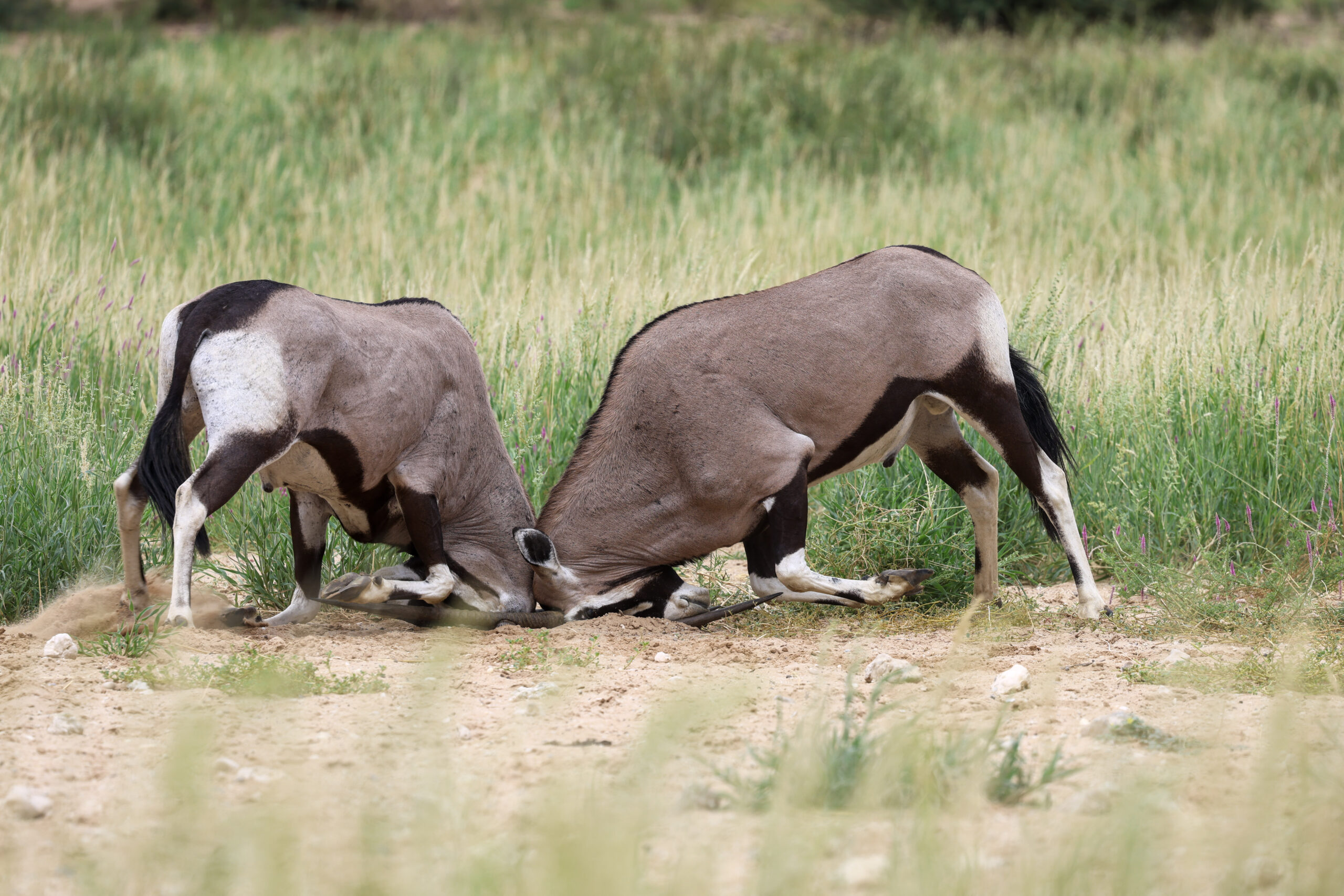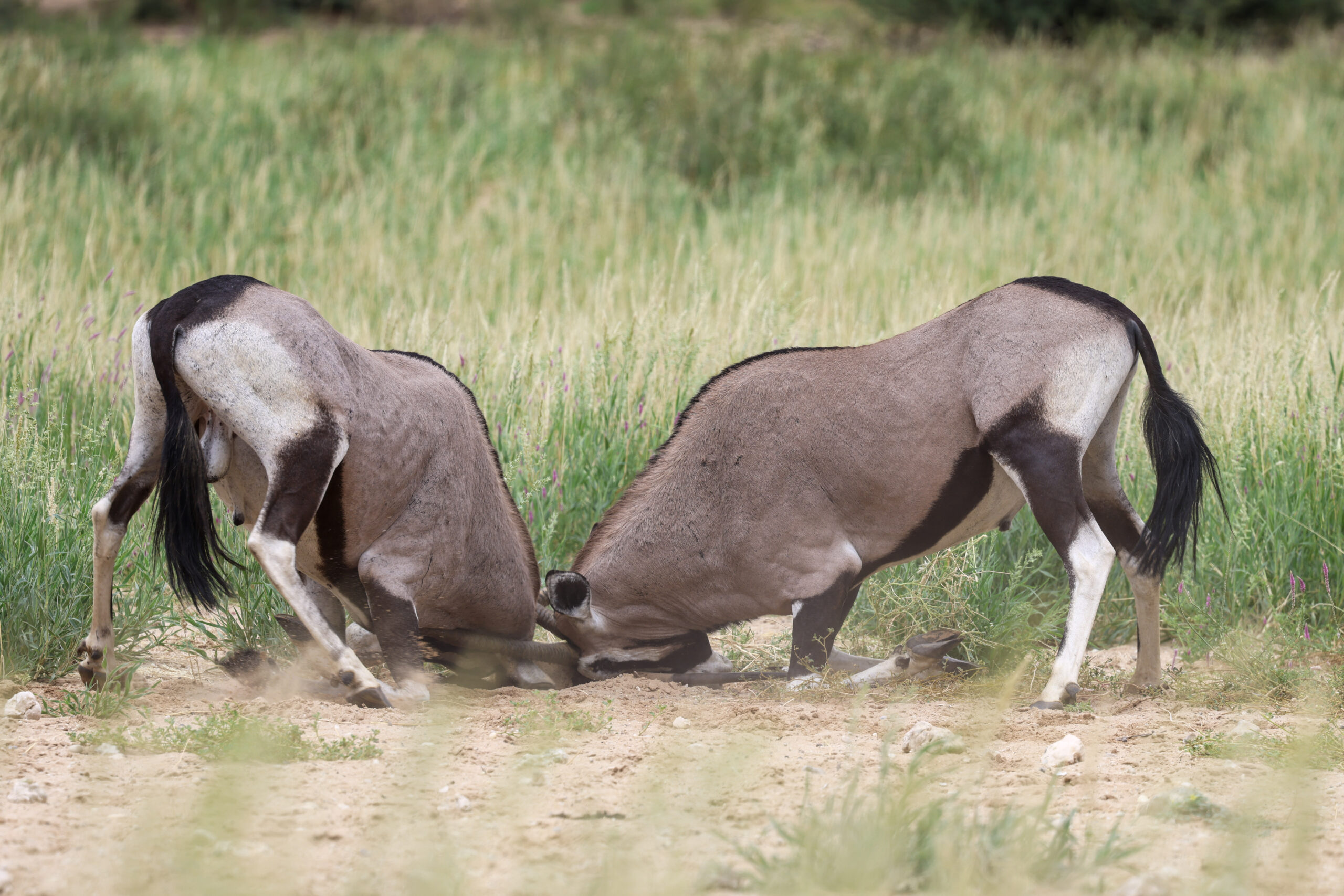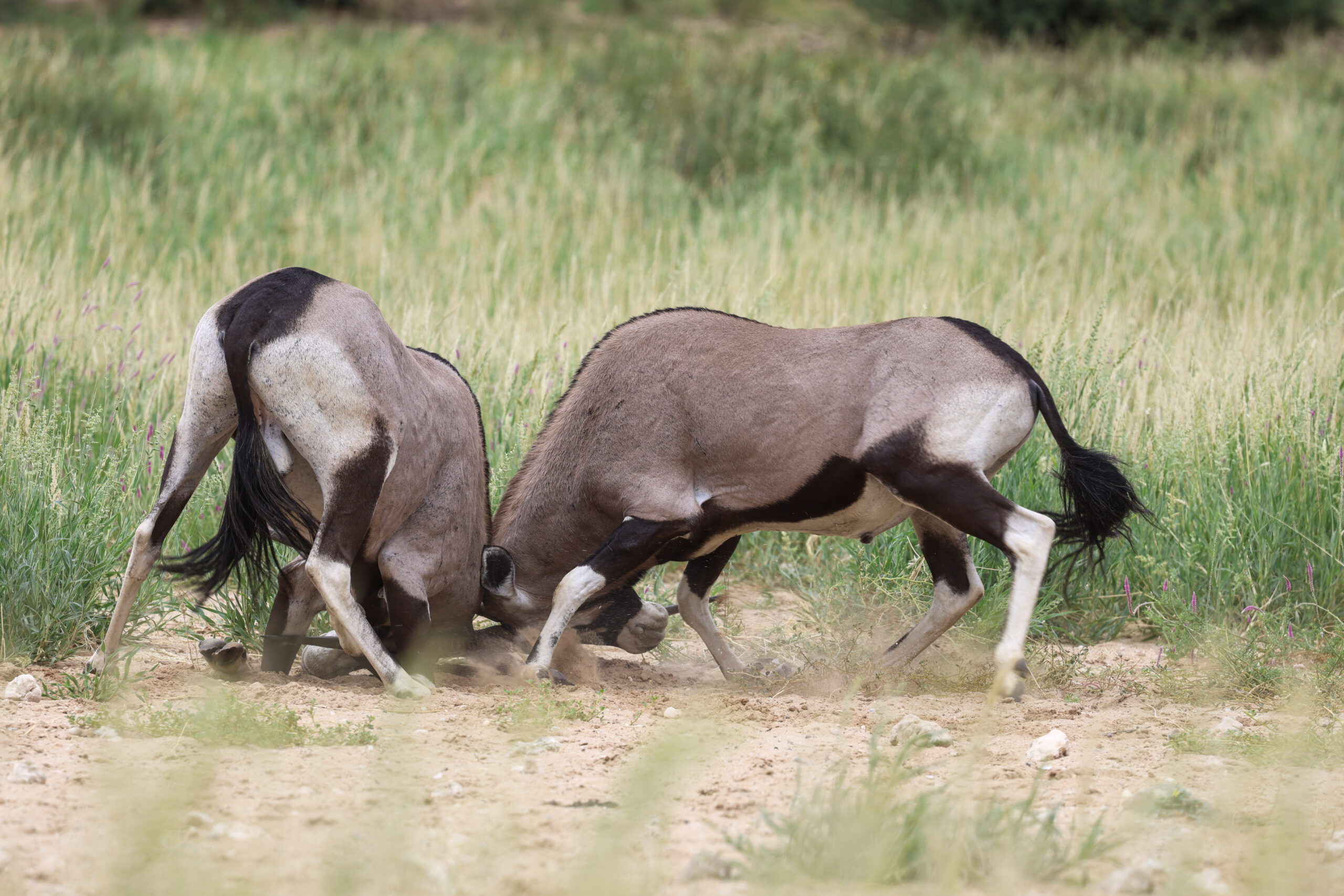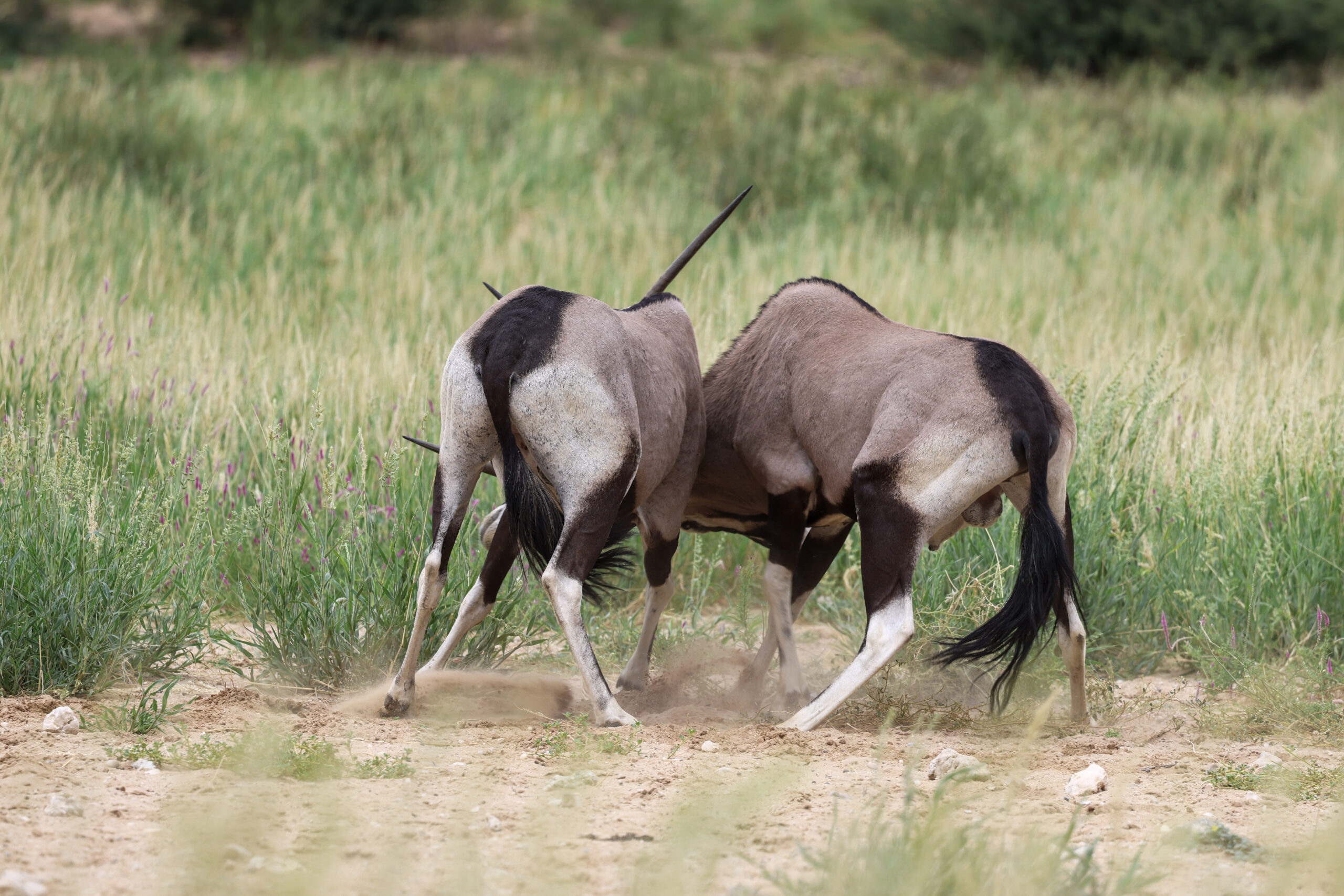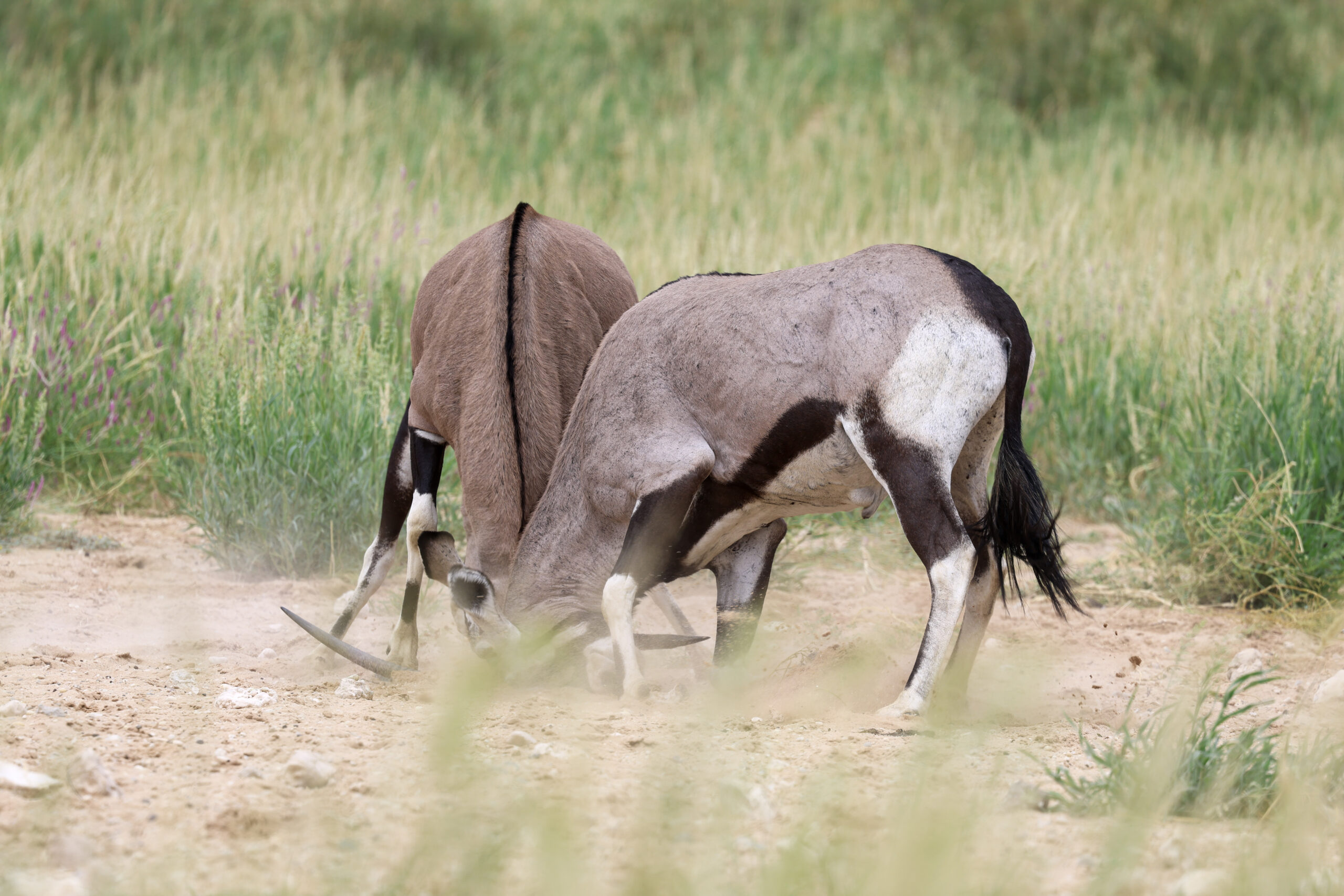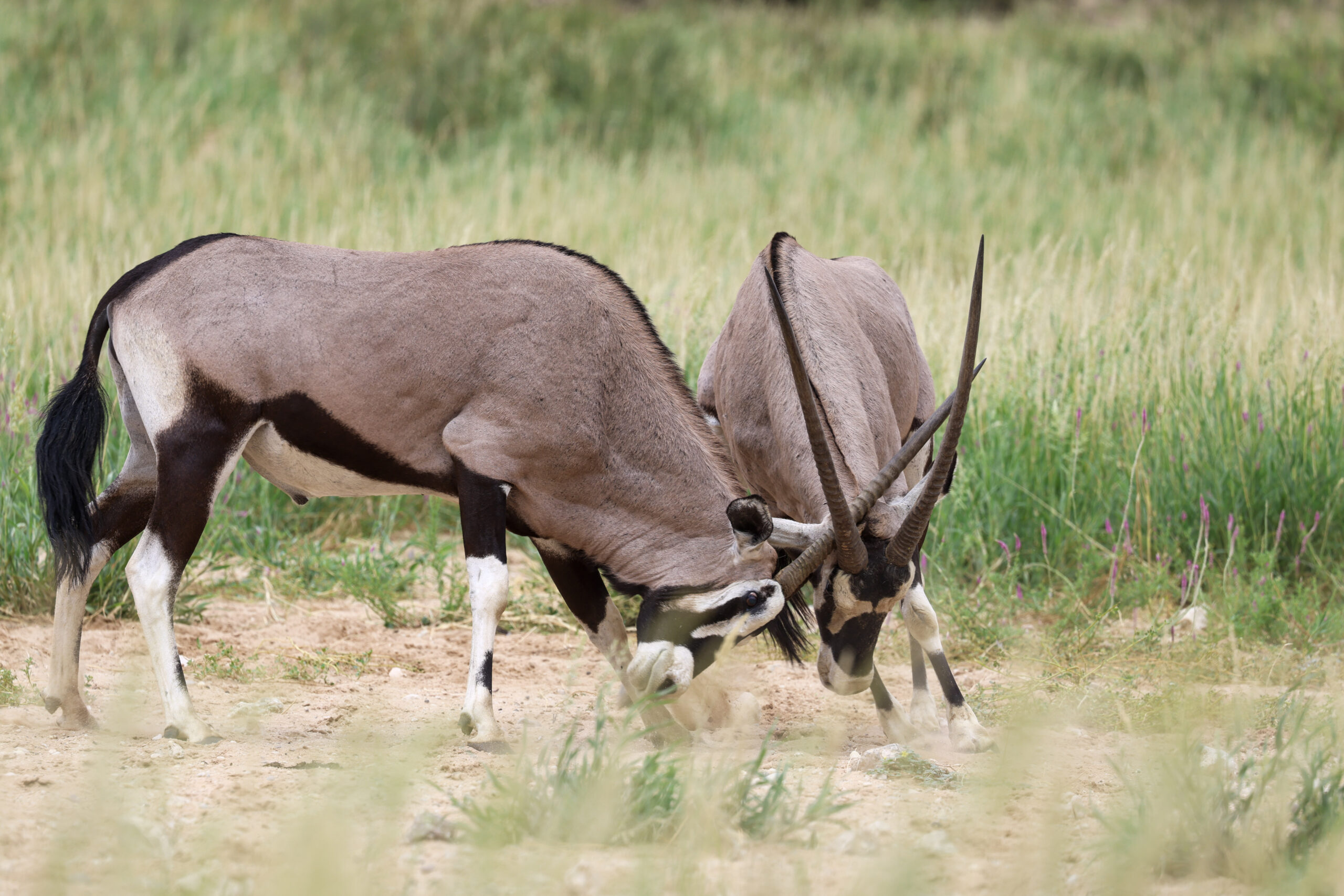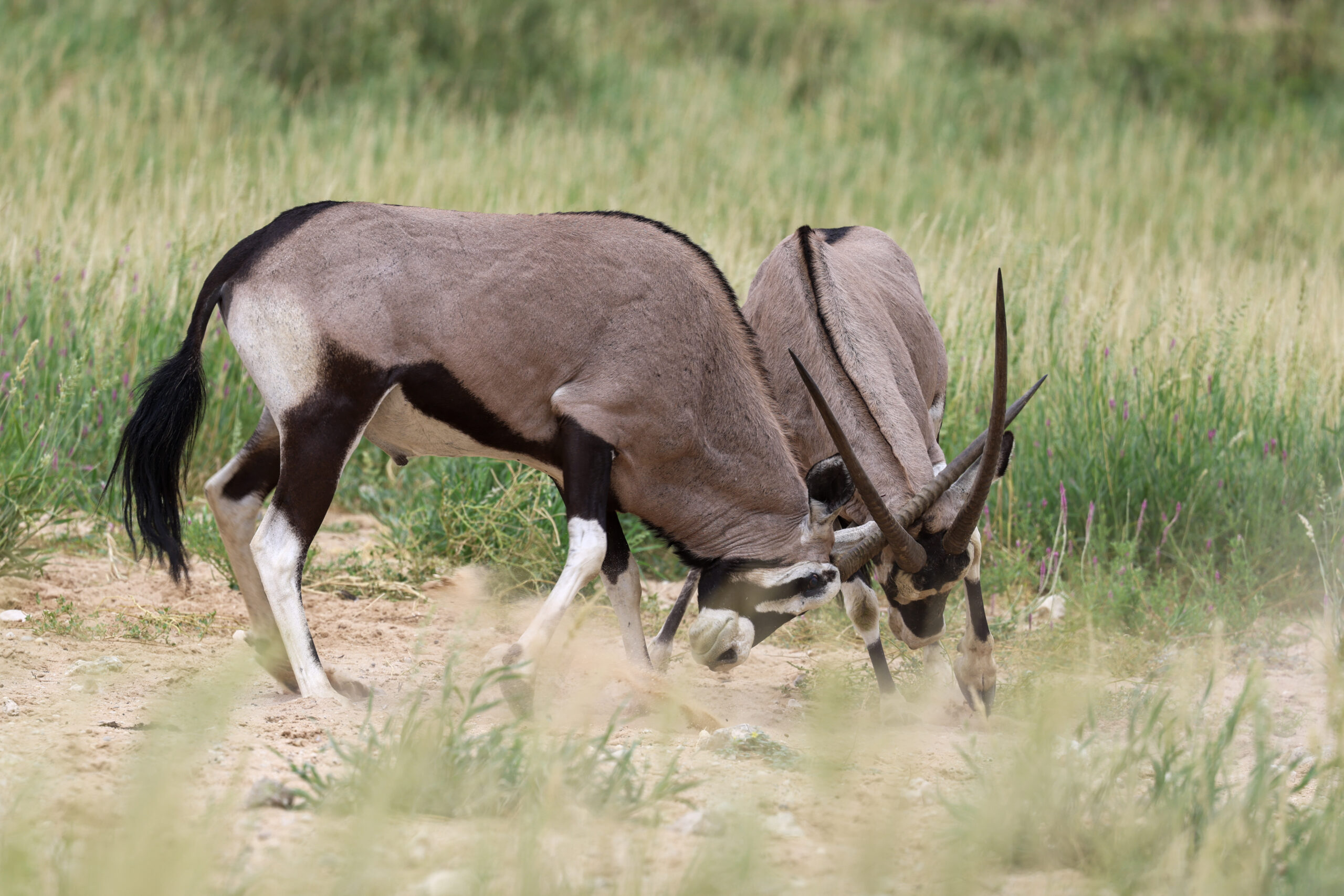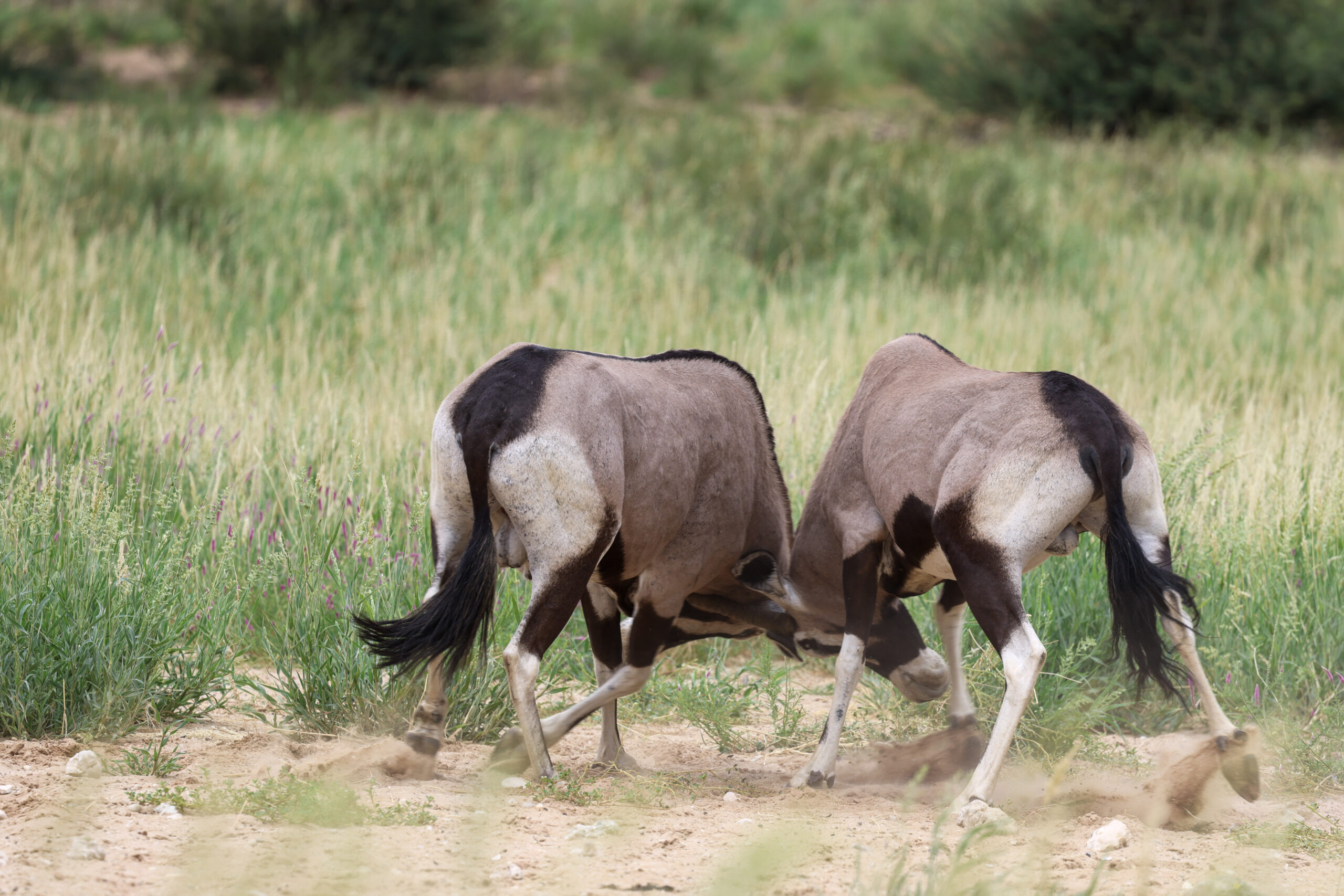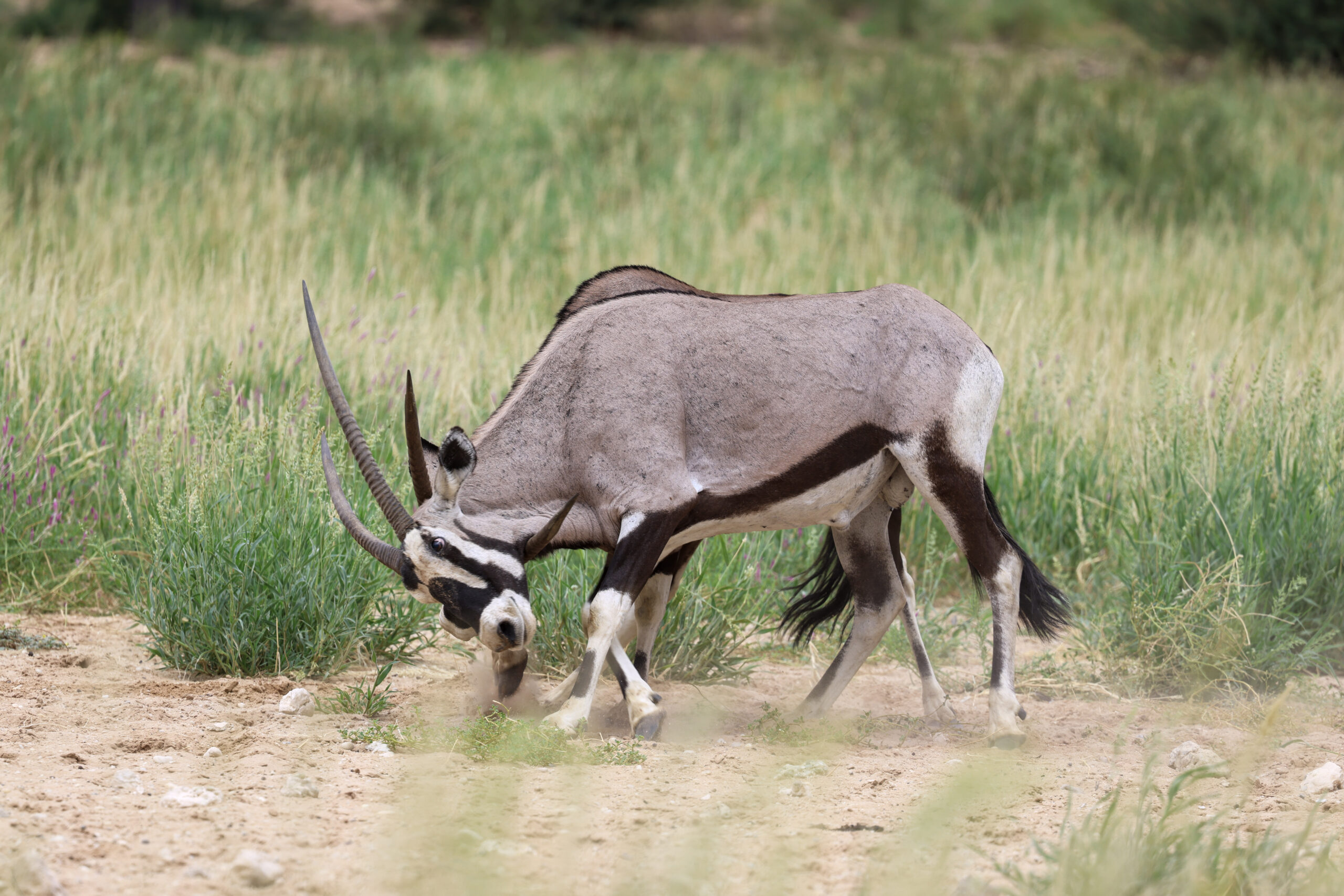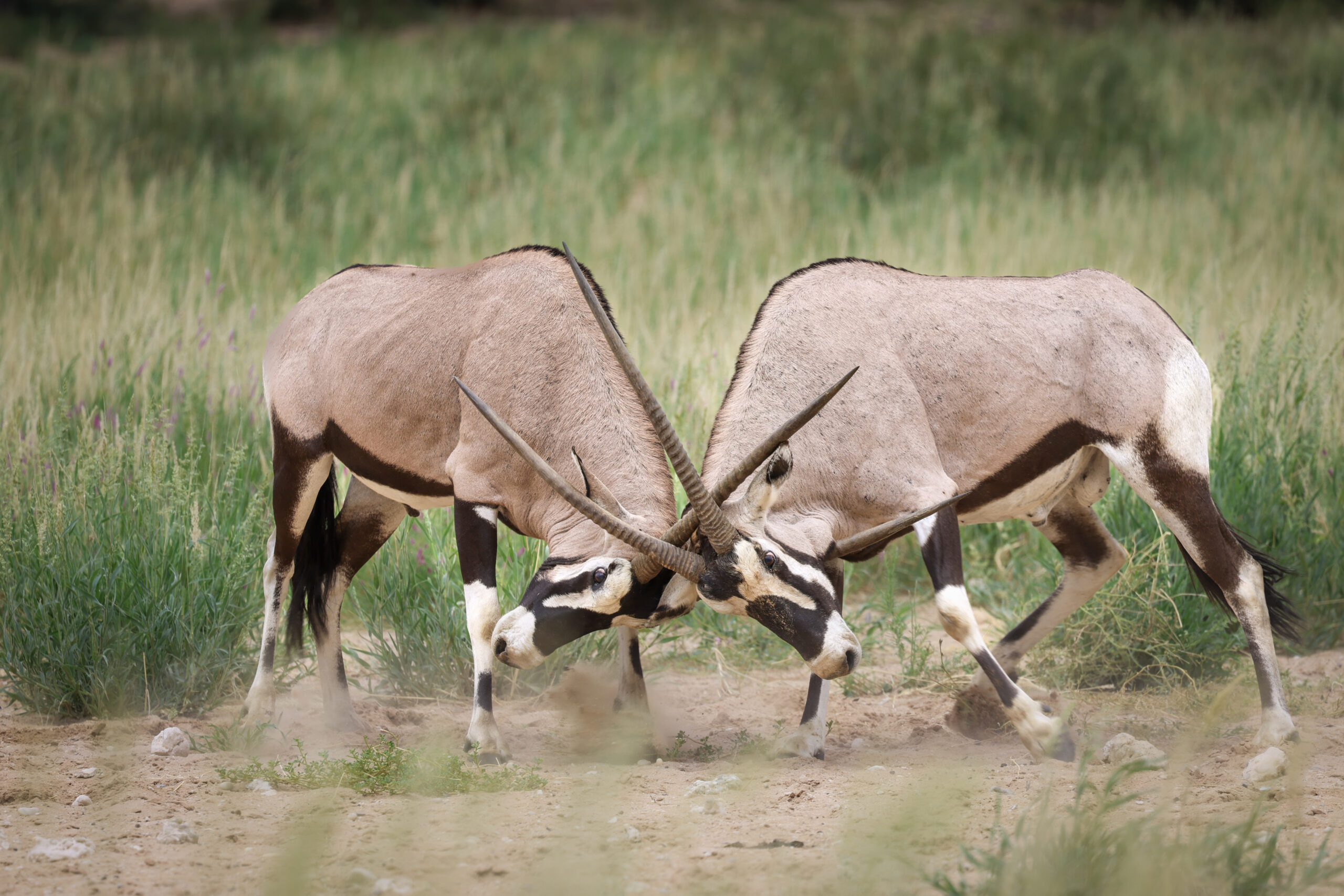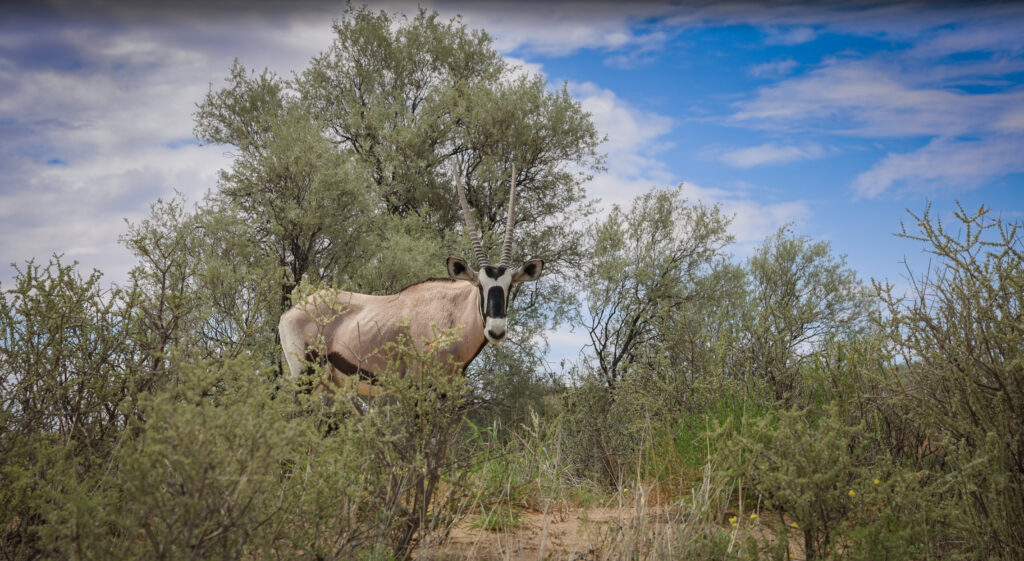
In the arid landscapes of the Kgalagadi Transfrontier Park, male gemsbok (oryx) engage in battles that are as elegant as they are lethal.
These duels serve not only as a means of establishing hierarchy but also as a dramatic display of physical fitness and endurance.
These intense confrontations are critical for establishing dominance within a herd and determining mating rights.
The outcome of these fights can influence the social structure of the entire herd for months to come.
Unlike many antelopes that head-butt, gemsbok utilize their 30-to-40-inch, rapier-like horns to “fence,” often fighting side-by-side to avoid being impaled by their opponent’s straight-forward lunge
Without warning, they locked horns with a loud crack that echoed across the dry riverbed.
As if prepared for a grand performance, the bulls displayed calculated movements and fierce determination.
Each clash sends vibrations through the earth, a testament to the strength and vitality of these magnificent creatures.
Suddenly, their movements quickened as they anticipated each other’s tactics.
They stood side-by-side, manoeuvring, attempting to hook their horns backward to strike the neck or chest of the other.
Every thrust seemed choreographed, revealing the elegance underlying their fierce competition.
This dramatic display of agility and strength captivates any observers fortunate enough to witness such a spectacle.
Witnessing this primal conflict is a privilege that resonates deeply within the souls of nature’s admirers.
To the onlookers, it looked less like fighting and more like a precise, deadly sword fight—a 19th-century duel played out with natural weapons.
The fight lasted for what felt like hours.
Time seemed to lose meaning as the two giants engaged in their age-old ritual.
With each thrust and parry, the tension in the air became palpable, as if nature itself held its breath.
The brightness of the midday sun cast long shadows as they fought, enhancing the drama of the moment.
The sand was kicked up, coating their sleek gray coats.
He felt the weight of the fight shift with every calculated thrust of his horns.
Now on the offensive, he seized the moment to apply pressure, testing the limits of his rival.
In a split second, the struggle tipped in favor of the more seasoned fighter.
At one point, the challenger managed to push the older bull backward, his horns raking the older bull’s side.
This delicate dance of dominance showcased the intricacies of their combat style.
In a display of skill, he struck with remarkable precision, forcing his opponent into a defensive position.
With renewed vigor, he deftly deflected the younger bull’s thrusts, maintaining control of the fight.
The older bull, however, was experienced; he used his heavy neck and shoulders to pivot, turning the tide.
According to reports from the area, such fights are sometimes to the death, though rare.
These contests, while brutal, are essential for the evolution and survival of gemsbok in this harsh environment.
They display not only physical prowess but also a strategic understanding of their adversaries’ moves.
As the fight escalated, each animal calculated its actions, anticipating the next move of its opponent.
In this particular case, the older, experienced bull managed to manoeuvre behind the challenger.
His heart raced as he sought to regain control in this fierce exchange.
In a surprising turn, the younger bull found himself on the defensive, feeling the weight of experience against him.
He aimed with all his might, understanding the stakes of this confrontation.
With a swift, calculated twist of his head, he aimed not for the neck, but for the ribs.