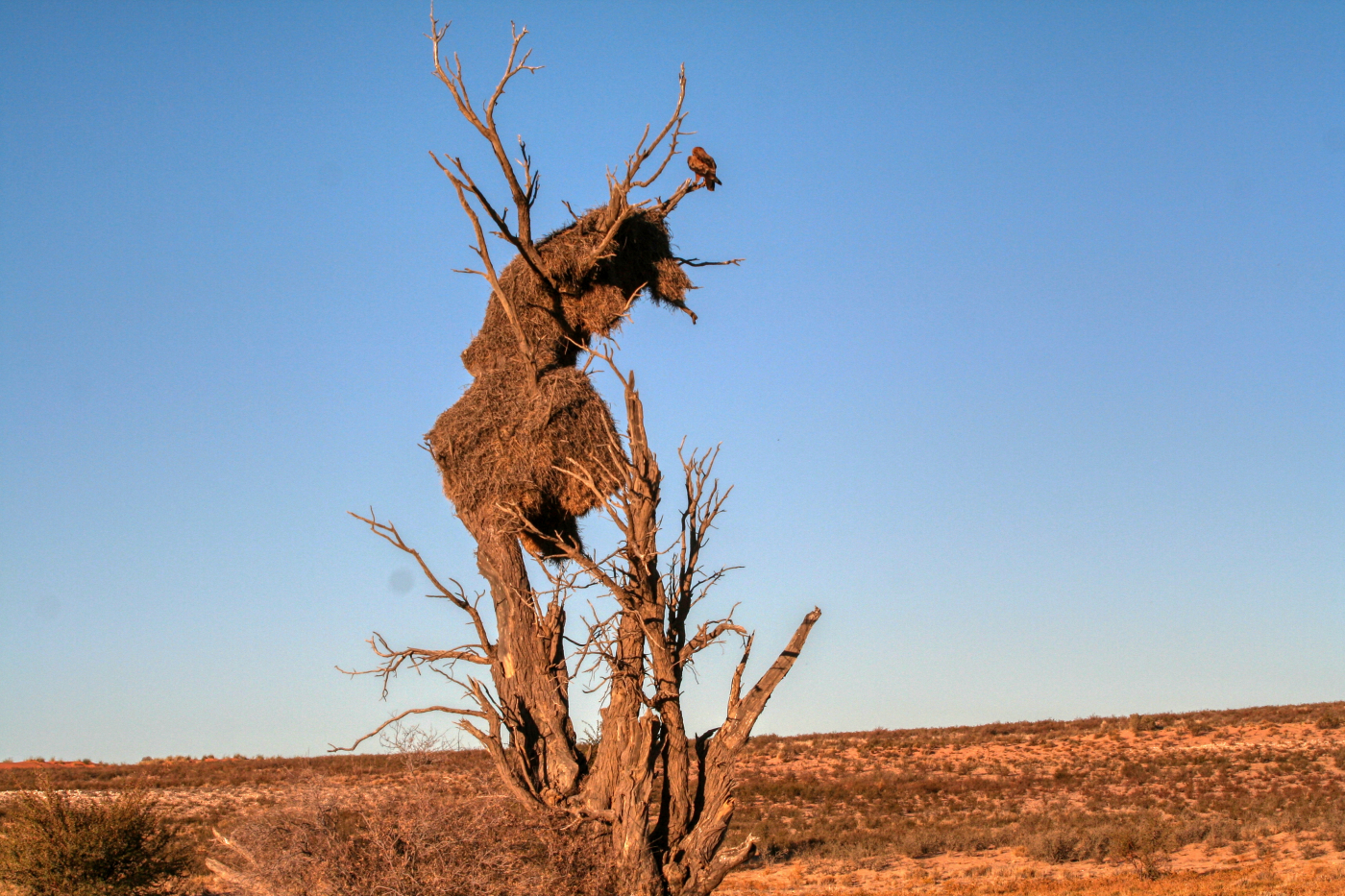
During my recent trip to the Kalahari Desert, I had the pleasure of encountering sociable weaverbirds and their intricately designed nests – a true architectural marvel of the animal kingdom. I was absolutely fascinated by the unique and intricate design of their homes, and I am excited to share my experience with you.
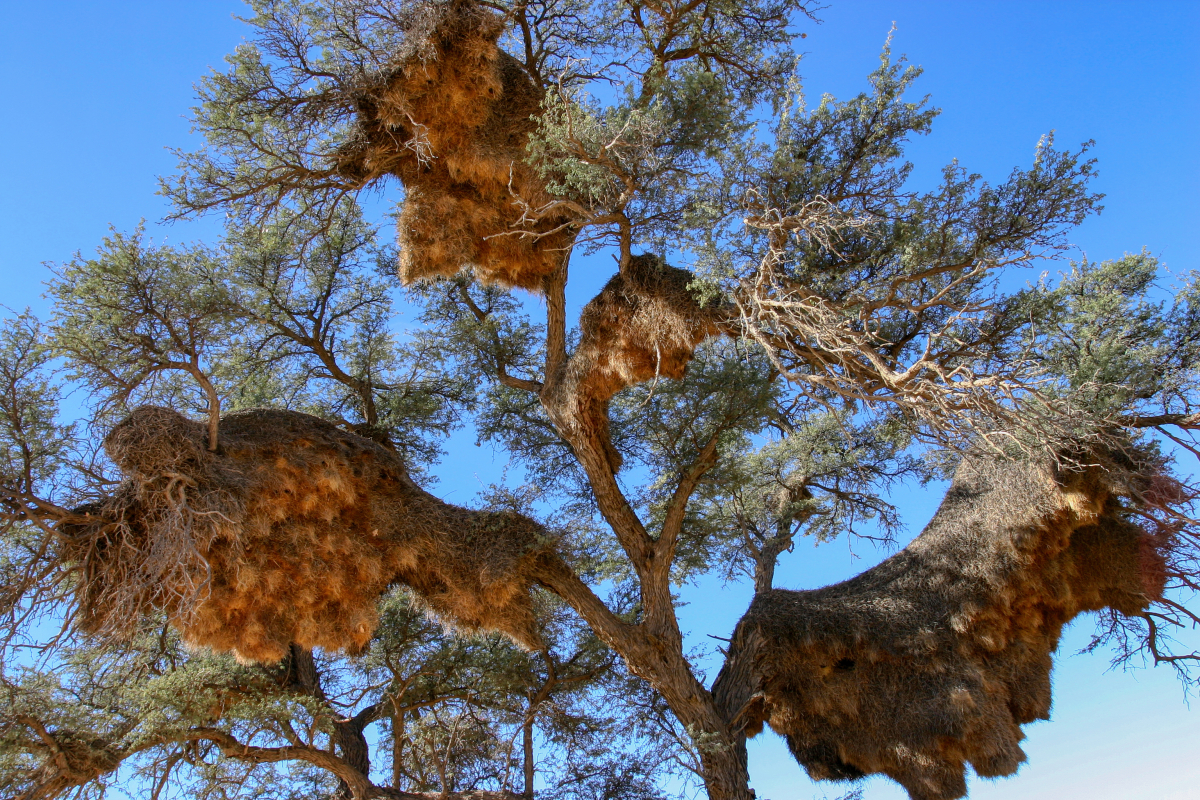
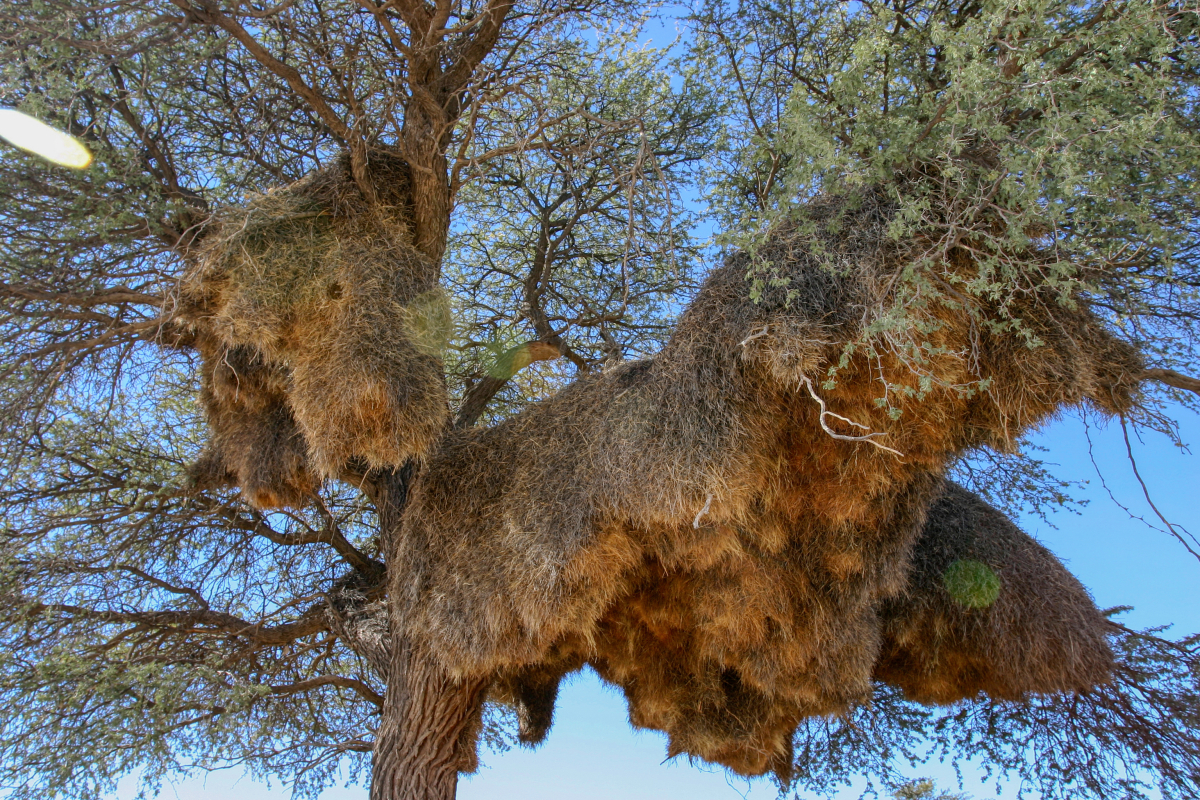
Unlike most weaverbirds, sociable weaverbirds don’t “weave” their nests. Instead, their nests look like miniature huts with a sloping thatched-grass roof that sheds rainwater. As I observed the birds, I noticed that they continuously add new apartments to their nests, meticulously inserting dry grasses into the bottoms and sides to further stabilize their already impressive structures.
Sociable weaverbirds are known for their communal living style, with several families occupying the same nest. I was amazed by the level of organization and cooperation displayed by these birds, each contributing to the construction and maintenance of their intricate homes.
My encounter with the sociable weaverbirds and their nests was an enlightening experience. It goes to show how even the smallest creatures can delight us with their ingenuity and exceptional building skills.
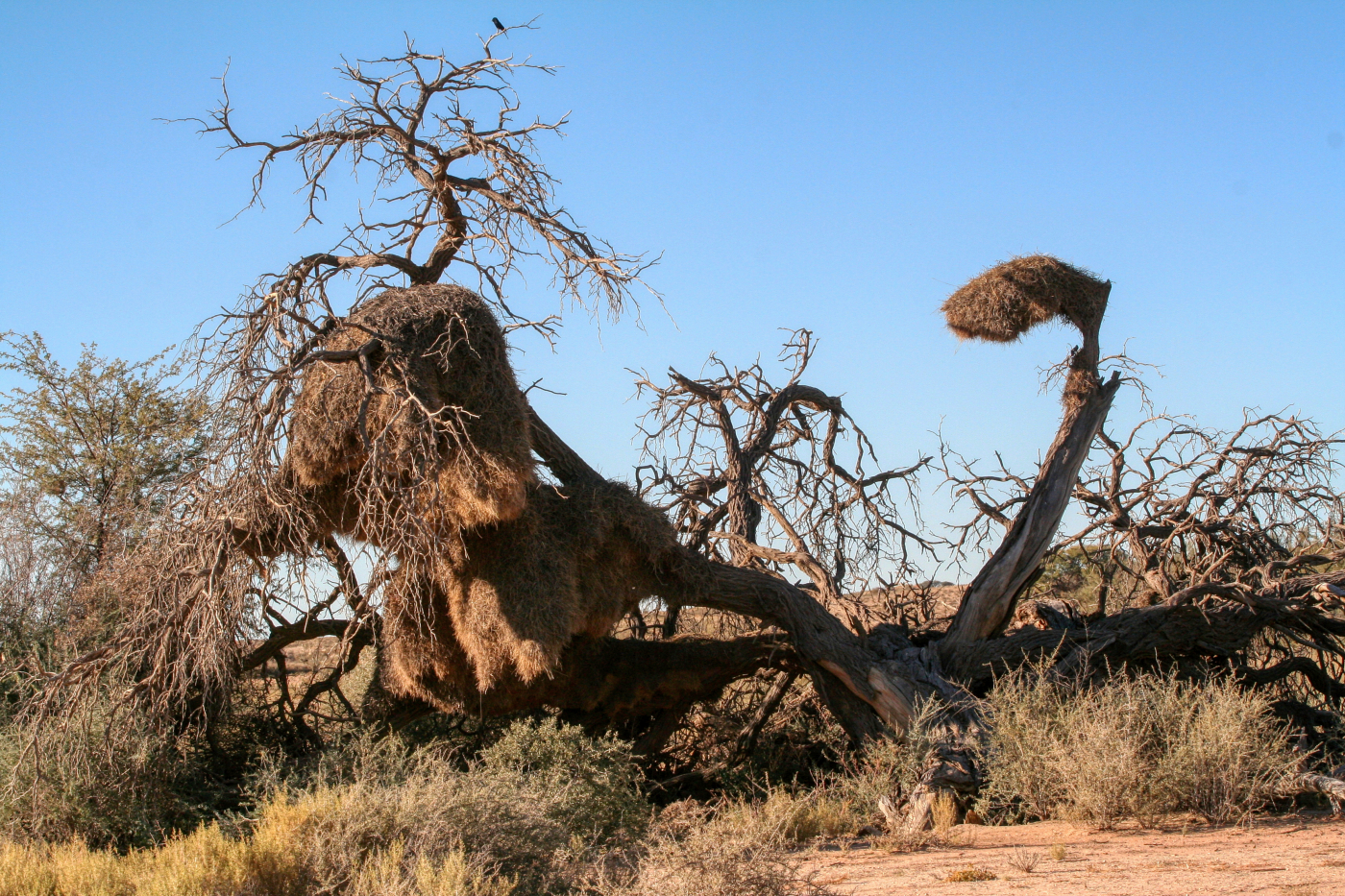
Oh, the memories that this nest brings back! It’s not an ordinary nest- it’s enormous, like a massive apartment block, that used to accommodate up to 100 sociable weaver birds all year long. These nests are known to be one of the largest and most complex bird nests in the world. Some of these nests have remained occupied by many generations for over 100 years, and they can grow to be larger than a car! From afar, it may resemble a haystack hanging in a tree, but up close, it is a complex system of chambers, tunnels, and rooms, a genuine engineering marvel.
The sociable weaver birds are found year-round in southern Africa, from Namibia to Botswana and South Africa. They are non-migratory birds and have adapted themselves to the semi-arid regions of Africa, where they have mastered the art of living in large colonies, cohabiting in their gigantic nests. Such nostalgia I feel when I think back to their impressive intelligence, their family values, and social behavior, and their nests that were a testament to their remarkable skills.
The sociable weaver birds, scientifically known as Philetairus socius, are a common sight in the Acacia savannas of the Kalahari and Namib deserts. Their fascinating habitat coincides with that of sturdy trees and dry, stiff grasses, which provides the necessary raw materials for their large communal nests. These nests are famously known as ‘weavers’ nests’ as they are intricately woven and can measure several meters in length.
These fascinating birds are very sociable in nature and are often seen nesting in colonies of up to a hundred individuals. They have also been known to share resources and help each other during times of food scarcity. Their complex social structure and cooperative behavior have earned them the nickname “sociable weavers”.
The sociable weaver birds are a marvel of natural adaptation. They have evolved a unique way of tackling harsh environmental conditions. These birds are able to regulate the temperature in their nests, which helps them survive during extremes of both heat and cold. Their nests also serve as a fortress against predators, providing shelter not only to the birds but also to other small animals that seek refuge in them.
In conclusion, the sociable weaver birds are an essential part of the unique ecosystem of the Acacia savannas of the Kalahari and Namib deserts. Their fascinating behavior and impressive nests make them a popular subject of study among scientists and birdwatchers alike.